
Where Old Minnesota Mugshots Survive
Hunting old Minnesota arrest material means checking four kinds of custodians. The sheriff or police department that created the file may still hold it. The jail may keep an intake register. A court may hold the case file. And after a transfer, the Minnesota Historical Society's State Archives may hold the rest. Each place answers a different question, too. A court file can show a charge and its outcome. The booking image may be long gone. A jail register can prove a commitment decades after the roster changed. An archive finding aid describes a collection without naming every person or photo inside.
Begin with the agency and an approximate year. Across Minnesota counties, rosters range from interactive systems to PDFs to by-request files. An old record may have no public search box. Ask the county sheriff or city police. They can tell you which record series exists and whether it stayed in their custody. For transferred material, start elsewhere. The State Archives and the MNHS collections search are the natural discovery points. Treat both as leads. Neither guarantees that a named person's photo is open or digitized.
Note: An archive catalog describes the whole collection, while the agency itself confirms whether one specific booking image still survives.
Minnesota Archive Collections
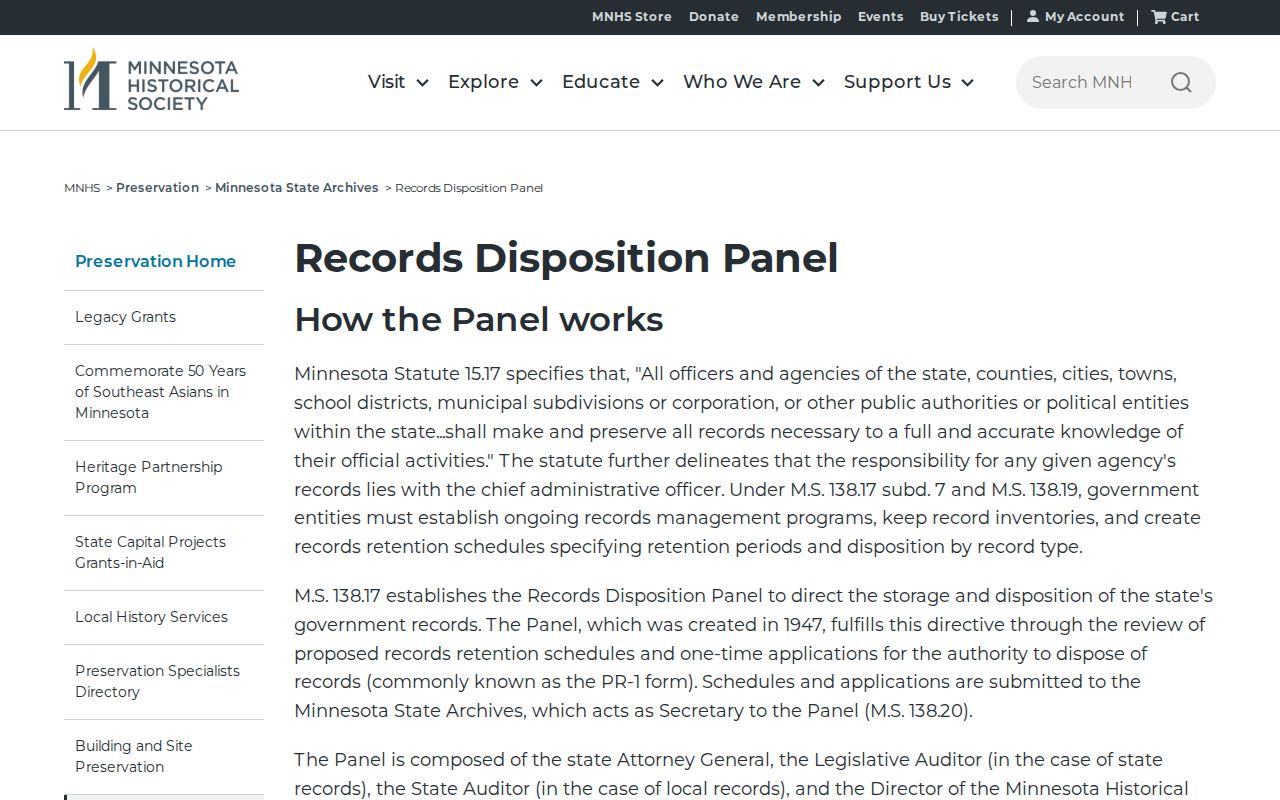
Several record paths branch out from the statewide sources. Search the catalog by agency, county, jail, facility, office, date, or series name. A person-name search alone can miss a collection. It may be filed under its creator instead. The Minnesota Records Disposition Panel page explains how records are appraised. It also shows how they move into archival custody. Read that process. It can tell you whether an older county series ever left the sheriff's office.
Transfer notices and collection descriptions only narrow the field. The archive or current custodian still needs the record details to pin down one specific file.
| Collection or Record | Where | What It May Hold | Access Path |
|---|---|---|---|
| County sheriff or jail series | Current county custodian, or State Archives after transfer | Jail registers, sheriff records, administrative files, and selected photographs | Ask the agency for its series and transfer history; search the MNHS catalog |
| State correctional institution records | Minnesota Historical Society | Selected prison and corrections records described in collection guides | Review the corrections historical-materials inventory and request classification before ordering a copy |
| District court case file | Minnesota Judicial Branch and the relevant county courthouse | Public case events, filings, orders, and disposition records when retained and open | Search MCRO; ask the courthouse about terminals or older files |
| Records schedules and transfer records | Minnesota Records Disposition Panel and the record-holding agency | Retention periods and appraisal or transfer decisions by series | Check the Records Disposition Panel and agency schedule |
One more tool helps identify county and agency material. That is the State Archives' law-enforcement leaflet. The leaflet treats archival records as collections with their own access conditions. A description of a sheriff's records never proves that booking photos from every year were transferred.
Minnesota Mugshot Retention Rules
Minnesota sets no single statewide retention period for booking photos. The Records Management and Data Practices guidance says government records must follow approved schedules. The State Archives Records Disposition Panel reviews those schedules and flags records with archival value. Each sheriff, jail, police department, or DOC office differs. Each has to sort out the series it holds. And a roster can drop a person overnight. That tells you nothing about the source image. It may have been destroyed, transferred, or just pulled from display.
One statute does bite. Minnesota Statutes §641.05 applies here. It makes a sheriff keep a permanent record of everyone committed to the jail. The register lists the name. It also lists the authority for commitment, residence, commitment date, a description, release information, and escape information. That is a register rule, not a photo rule. Nothing in it forces every electronic booking photograph to survive forever or go online. A separate electronic recording of arrest, booking, or testing falls under §629.406. It carries a 30-day statutory minimum. That says nothing about photo retention either.
The official Minnesota retention guidance lays out the schedule framework. A sample county schedule lists many series with different retention periods. The Mille Lacs County schedule is one example. It lists many series with different time periods. Do not treat it as a statewide mugshot rule. The state records-management page shows the rules agencies actually follow. Check the exact series and agency schedule before assuming anything survives.
For an old image, ask a simple question. Does the photo carry its own schedule? Then ask how that schedule relates to the jail register or case file beside it. The day a person vanishes from a roster is not a retention notice. It never was.
Note: A permanent jail register and an electronic booking photo can sit under different schedules and different access rules.
Request Minnesota Archive Records
A narrow request beats asking for a whole county's old mugshots. Give the custodian the person's full name. Add an approximate birth date if you have one. Add the county, the arrest or commitment period, and any court file or jail-register number. State the exact record type you want. Ask up front whether the image is still held. Ask whether another office has it, and which schedule governs the series. Chapter 13 opens the door to public government data. But it never forces an agency to build a new database. It does not certify a third-party compilation.
- Identify the likely agency, county, jail, and date range. Use a citation, case number, or known court disposition to narrow the search.
- Ask the agency for the record series, current custodian, retention schedule, and disposition history. Confirm whether the booking photo was destroyed, transferred, or remains in the agency's files.
- Search the MNHS catalog and State Archives finding aids by county, sheriff, jail, facility, office, dates, and series. Record the collection title and any box, folder, or digital identifier.
- If the State Archives holds the series, ask about its finding aid, access classification, researcher access, and reproduction conditions. Include the exact image or register entry sought.
- Before requesting a copy, confirm whether a court seal, juvenile rule, active-investigation limit, donor term, privacy restriction, or other access rule applies.
MNHS identifies both archival discovery and correctional-record request paths. Its state correctional institution and prison-record request page concerns DOC/prison records, not county booking photos. MNHS says inmate records are generally restricted for 75 years from the last entry in the record or file. Ask the archivist to classify the requested record before seeking a copy; do not assume that age makes it open.
That 75-year restriction describes MNHS inmate files, not a universal clock for county jail photographs. County sheriff records, state prison records, and court files have different custodians and schedules. An archive can also limit access because of law-enforcement security, private donor terms, or a privacy rule that remains in force after transfer.
A finding aid may describe a corrections collection at the level of an agency or office rather than name each person inside it. The archival inventory helps a researcher identify the right collection; only the repository can say whether a particular folder is present, open, and available for reproduction.
The MNHS request page describes access conditions for state correctional records. Those terms are separate from the schedules that apply to county jail and police records.
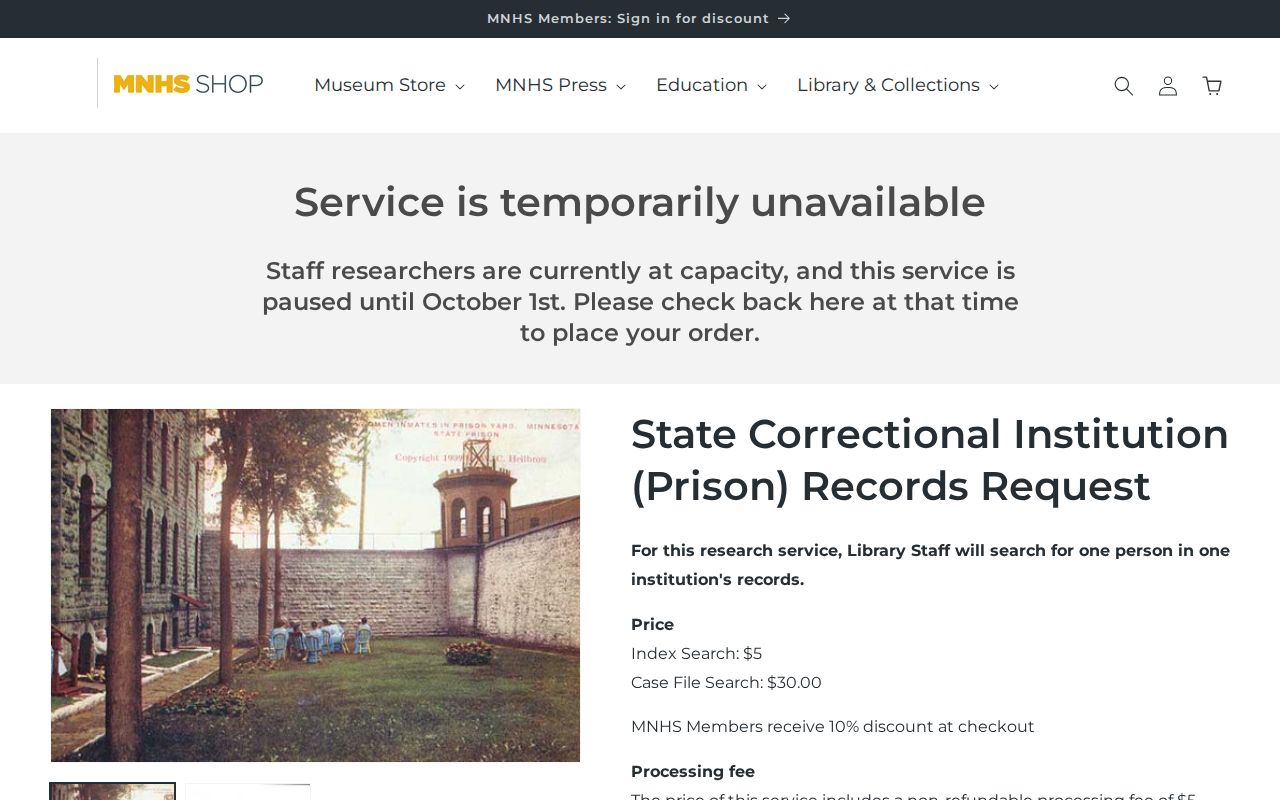
Every custodian sets its own fees and turnaround. There is no statewide schedule for archive copies, so read the current request instructions before ordering a reproduction.
Current Records and Archives
Fresh booking data starts with the arresting agency. A county jail or city police department, not a state archive, holds it. A roster may list only current inmates. Photo requests go to the originating office. The Minnesota County Directory routes you to each county source, and the statewide Minnesota lookup page sorts out how rosters, arrest feeds, DOC records, courts, and request channels differ.
Archives matter once a current portal stops holding the item. The same goes for old registers. A permanent jail register under §641.05 can outlive the electronic portrait. A transferred collection may sit partly described or restricted. Court files can show a later outcome. Yet a court file never proves an old photo stayed with it.
An archival lead is just a lead. It takes a direct question to the custodian to learn what survives, what was transferred, and what access limits apply.
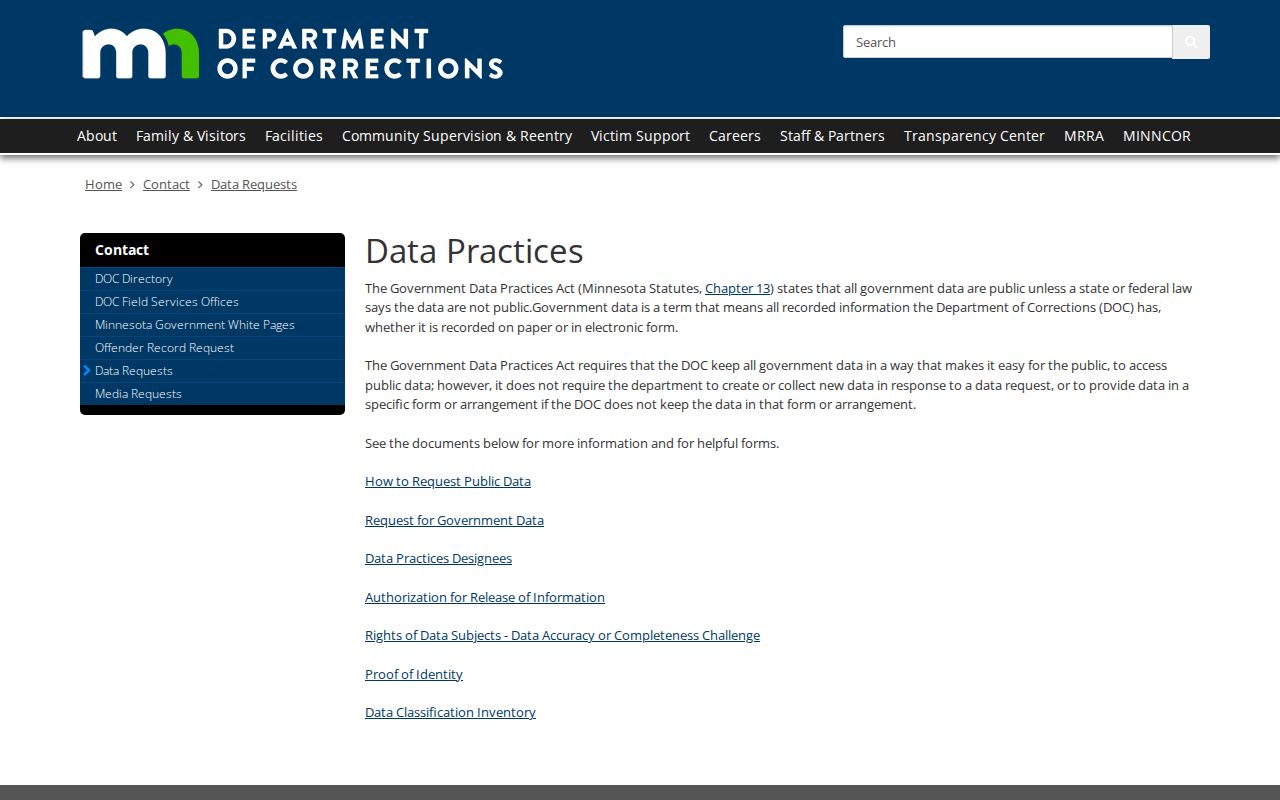
When the Department of Corrections still holds the records, its written public-data request process asks for enough detail to identify the data. Two boundaries matter here. A DOC request never reaches county jail records. And an archive request cannot settle current custody questions. The official DOC request page explains how to seek state-held material. For a local booking image, go to the county or city office that created the record. Neither DOC nor MNHS works as a statewide image bank.
Historical custody and current roster status answer different questions. Keep them separate. A court result, a register entry, a DOC file, and a county photo can each sit with a different custodian under a different access rule.
Note: Minnesota archive access turns on transfer, classification, and any restrictions tied to the specific record series.