
Notable Minnesota Arrest Records
A famous Minnesota arrest can make one photo feel like the whole case. It never is. A jail or sheriff may hold the booking image. The Minnesota Judicial Branch keeps the court file. A prosecutor's office, in turn, may publish charging or dismissal notices. Each source covers only its own slice. For the cases listed here, an official record location and a supported outcome anchor every entry. No booking photographs are hosted on this page. Anyone chasing a specific image should ask the agency that holds it. Anyone checking a result should read the court register, judgment, or latest case update. The same order works for any ordinary Minnesota arrest. Confirm the person and county, find the record type, then follow the case to its end.
Minnesota Case Record Index
The index entries lean on primary court and government sources, and each marks the outcome now on file. Nothing here ranks the cases. Famous proceedings are not routine bookings.
| Case | Year | Disposition Noted | Original Record Route |
|---|---|---|---|
| Derek Chauvin | 2020 | State convictions and sentence; federal case separate | Minnesota Judicial Branch case page |
| J. Alexander Kueng | 2020 | State guilty plea and sentence; federal case separate | Judicial Branch case page |
| Thomas Kiernan Lane | 2020 | State guilty plea and sentence; federal case separate | Judicial Branch case page |
| Tou Thao | 2020 | State conviction and sentence; federal case separate | Judicial Branch case page |
| Kimberly Potter | 2021 | Manslaughter conviction and sentence | Judicial Branch case page |
| Mohamed Noor | 2017 | Second-degree manslaughter conviction after appellate change | Judicial Branch case page |
| Ryan Londregan | 2024 | Criminal charges dismissed, not an acquittal | Hennepin County Attorney release |
| Vance Boelter | 2025 | Federal guilty plea and sentence; state case separate and pending at research date | Minnesota Judicial Branch state case page |
Minnesota Floyd Case Records
Four former officers faced Minnesota charges after the death of George Floyd: Derek Chauvin, J. Alexander Kueng, Thomas Kiernan Lane, and Tou Thao. The Minnesota Judicial Branch gives each a separate high-profile case page. Each man also faced a distinct federal civil-rights proceeding. So the files do not match up neatly. Always name the defendant and the court before citing a result from these cases.
Derek Chauvin
Chauvin was arrested and charged in Floyd's death. The Judicial Branch's State v. Derek Chauvin page posts the official filings and related matters. He was convicted of murder-related offenses in state court. He was then sentenced. The federal civil-rights case ran separately. For documents, start with the court page's complaint, register, and judgment. Hennepin County handles any separate request for a booking record or image. That applies where one is lawfully available.
J. Alexander Kueng
The Kueng case page names Hennepin case 27-CR-20-12953 and links sentencing material. Kueng pleaded guilty in the state case. He was sentenced there. His federal civil-rights disposition stands apart as its own matter. A roster snapshot can't substitute for either result. Follow each jurisdiction's record through its own file number.
Thomas Kiernan Lane
Lane pleaded guilty in Minnesota state court and received a sentence there. His federal civil-rights case is a separate record entirely. The Judicial Branch maintains the Thomas Kiernan Lane case page with the court materials. The state disposition rests on the register, plea, and sentencing papers. Want the booking photo? Ask the jail or agency that took it. Skip the commercial index.
Tou Thao
Thao's case ended differently: a conviction after trial in the state prosecution, then a sentence. Federal proceedings stayed their own matter. The Tou Thao page holds the state case materials. That is why a careful record search goes past the first arrest report. It reads the state judgment instead. The final outcome belongs beside the booking, not in a footnote to a photo. Note: Each of the four related state cases has its own docket and a separate federal proceeding on paper.
Minnesota Arrest Outcomes Change
A big case rarely ends where it starts. Trial, appeal, dismissal, and even a change of custody system can reshape it. The latest court order controls, since an old headline may cite a charge that did not survive.
Kimberly Potter
Kimberly Potter was arrested after the fatal shooting of Daunte Wright in Brooklyn Center. She was then charged. The Judicial Branch Potter page serves as the official case source. She was convicted of manslaughter and sentenced. For current custody, the DOC is the proper route. That applies when she sits within its jurisdiction. An old jail image proves nothing about present status either way.
Mohamed Noor
Mohamed Noor was arrested and prosecuted after the death of Justine Ruszczyk Damond. The Judicial Branch case page carries both district and appellate history. The Minnesota Supreme Court ordered the district court to vacate his depraved-mind-murder conviction. It directed the court to impose sentence on the second-degree-manslaughter conviction instead. That appellate result must replace the earlier shorthand. When a record changes on appeal, use the current disposition. Do not lean on the first arrest headline.
The MCRO case-search form is one route to public register entries. Its own search page carries a warning. Online results are unofficial and incomplete. For a full record, use the court file itself. Courthouse staff can also point to public-terminal records that never appear online.
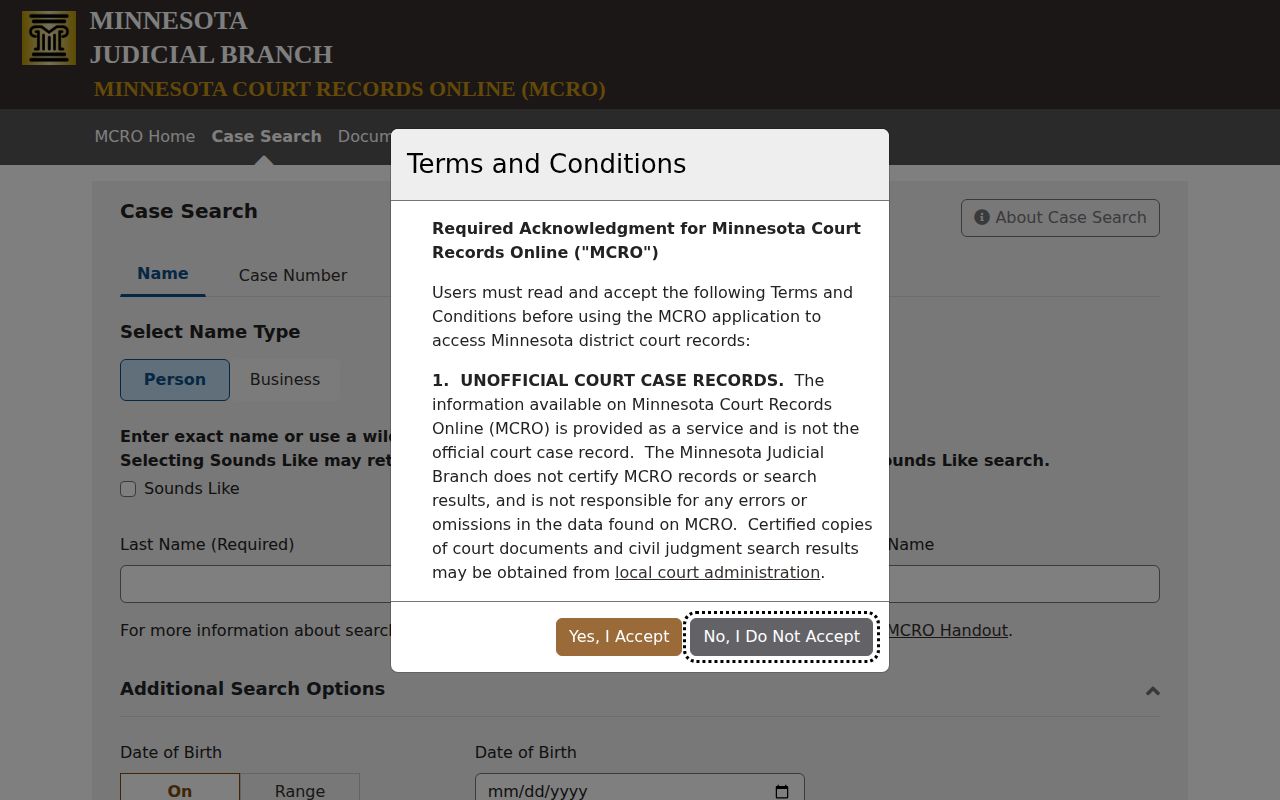
A search form ties a name or case number to a court docket. Trace it through the register and disposition papers before describing what happened.
Minnesota Arrest Dismissals and Acquittals
Ryan Londregan
Ryan Londregan, a State Patrol trooper, faced charges after Ricky Cobb II died during a 2023 traffic stop. Prosecutors later dropped the case. The Hennepin County Attorney's dismissal release explains why: evidence disclosed by the defense left the case impossible to prove beyond a reasonable doubt. So the outcome is a dismissal. CBS Minnesota later reported an internal State Patrol finding. That administrative conclusion stands apart from any criminal-court verdict. For the original outcome, read the court file and the prosecutor's release.
Vance Boelter
Vance Boelter was arrested after the 2025 shootings of Minnesota lawmakers and their spouses. His matters split into two courts. In the federal case, he pleaded guilty and was sentenced in June 2026. The state case did not end there. Hennepin County said its charges were untouched by the federal result. Prosecutors there would move ahead on their own. The state case was still pending. Keep the two dockets separate. The state court page, the federal materials, and prosecutor updates each answer a different question. One plea in one court never resolves the other.
These cases show why an outcome should be stated in the court's own words. A dismissal, an acquittal, a plea, and a conviction are four different things. One case cannot decide a separate prosecution.
Note: For split state and federal cases, check each court's own register before stating the result.
Where Minnesota Case Records Live
A headline arrest and a routine booking share the same paper trail. Start with the arresting agency. Pin down the county and date. Then check the court file for what happened next. The statewide Minnesota arrest and booking lookup shows how to route custody checks, records requests, court cases, and prison status. Older registers may sit with the State Archives or the creating agency.
- Use a current county roster or booking report to identify the arresting agency and approximate booking date. A roster shows custody at a point in time, not the final result.
- Search Minnesota Court Records Online by case number, citation, or name. Open the register of actions and the actual order, judgment, or dismissal notice.
- Ask the original jail or law-enforcement agency for the booking record or photo. Give a precise date, name, and case number, and ask whether an access exception applies.
- If the web roster no longer holds the material, ask which retention schedule governs and whether the record went to an archive. The Minnesota old-record archive route explains those steps.
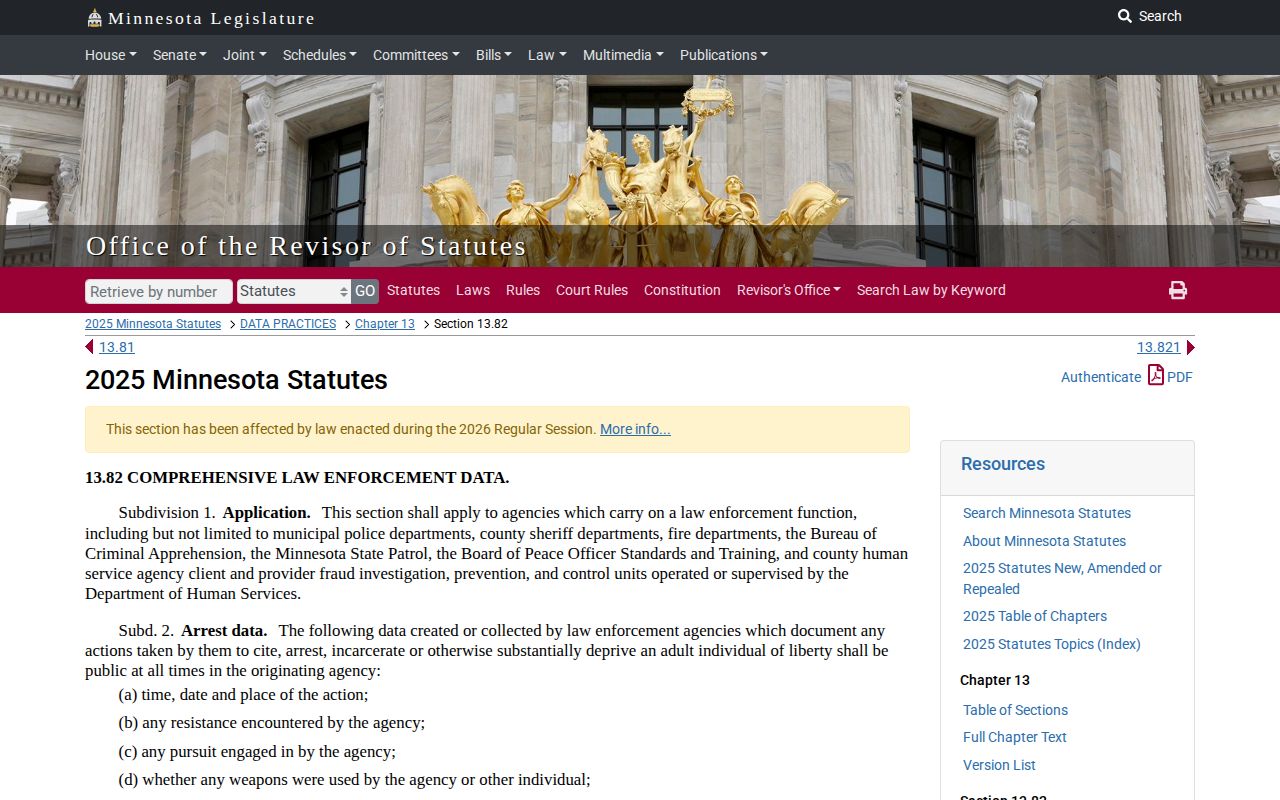
Minnesota Statutes §13.82 covers booking photos. It makes them public by default, with exceptions like temporary withholding during an active investigation. The law governs government data only. Private copies fall outside it. An agency can offer inspection or a copy without keeping a public photo grid online. The official Minnesota law-enforcement data statute spells out the categories. It also sets the limits that apply to booking data.
The photo rule also has a policy back story. Lawmakers once weighed complaints about commercial sites charging to remove images. The 2014 HF 1940 proposal never became law. Today's §325E.80 deals with something else entirely. Cite it as a mugshot-removal law and you cite the wrong statute. The official 2014 bill text shows what was proposed, not what Minnesota law requires now.
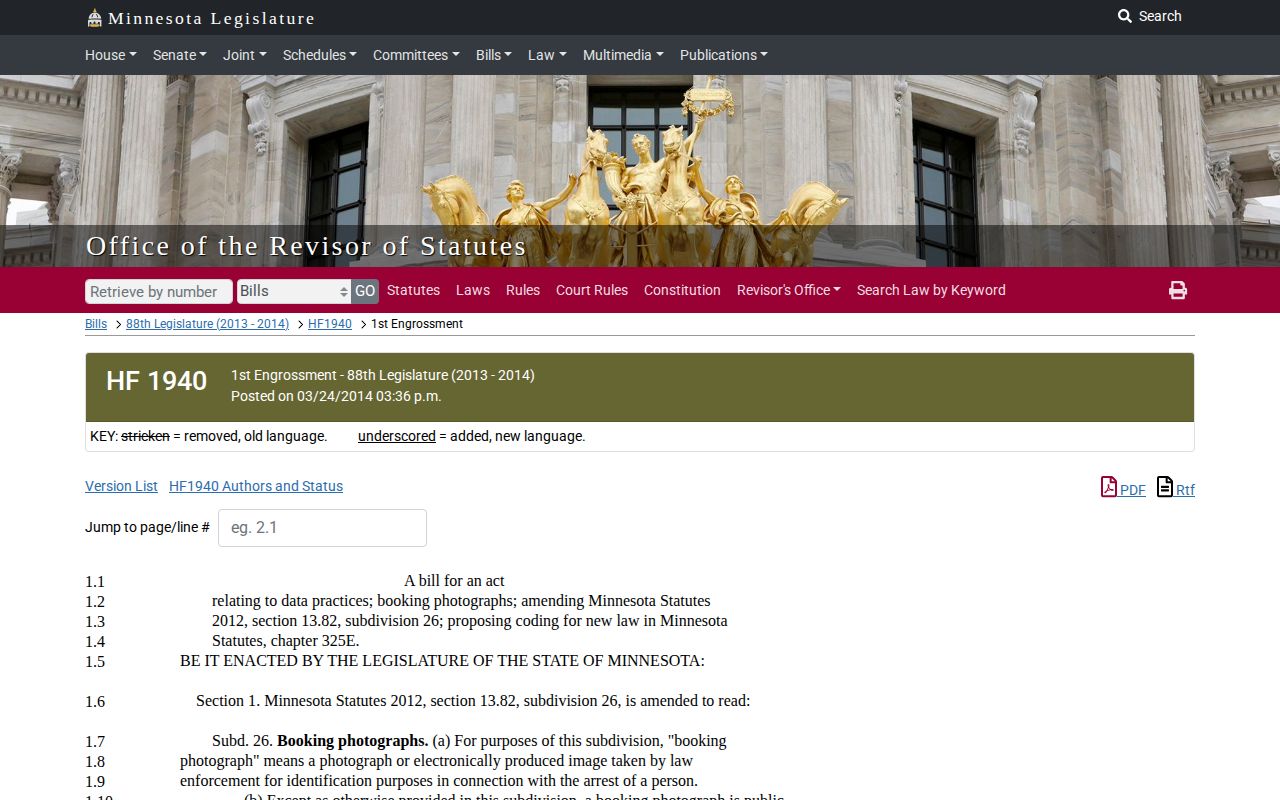
That proposal adds policy context only. It changes nothing about the court and agency lookup path for the notable cases above.
When a record is sealed or expunged, read the court order. List the agencies it covers. The Judicial Branch's criminal expungement forms are the official starting point for petition and automatic-relief details. A third-party copy still sitting online proves nothing. The government record is what counts. The Minnesota expungement forms page is a court resource, not a promise that every old image vanishes. A copy held by a publisher may need its own accuracy or legal-status request.
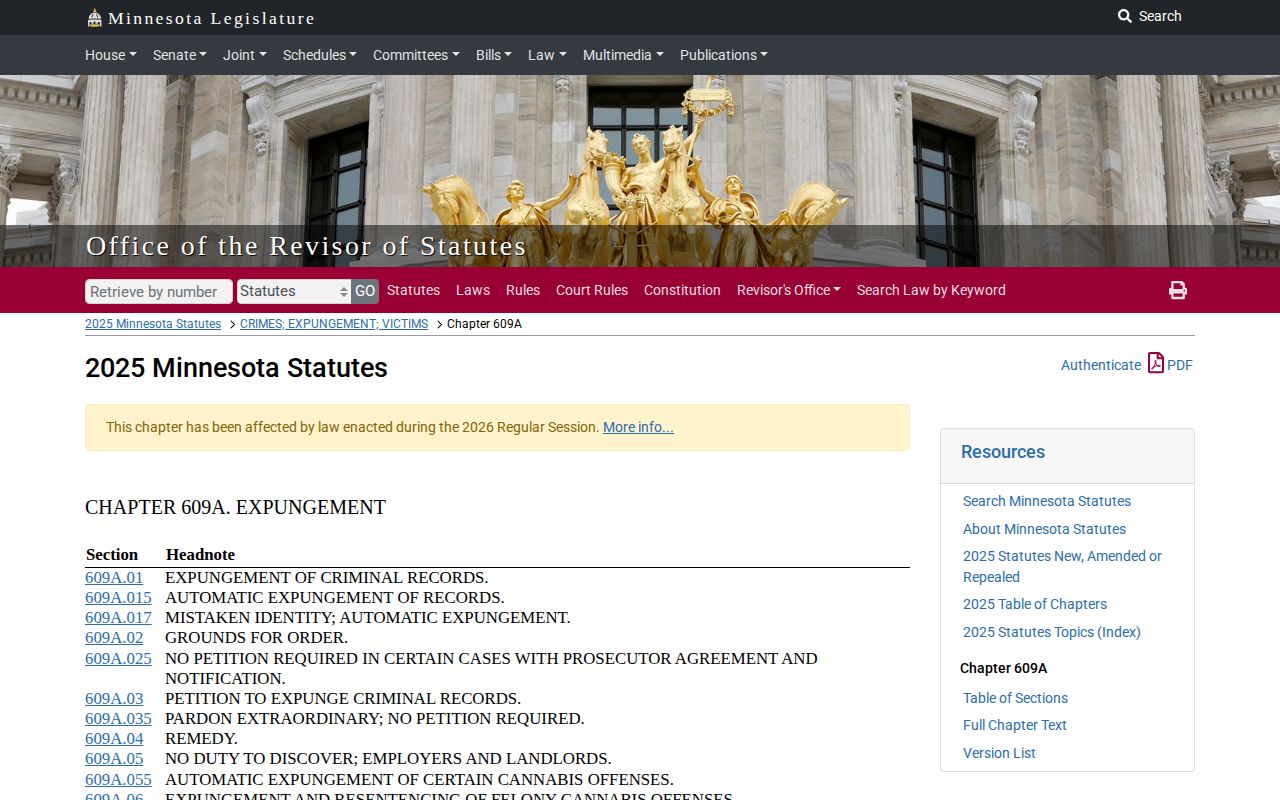
Before repeating any arrest detail, confirm identity and date first. Then state the outcome in the court's words. That check beats a photograph. It also beats a first-day article or a third-party profile, every time.
Note: A court order changes public access only for records and custodians its terms cover.